
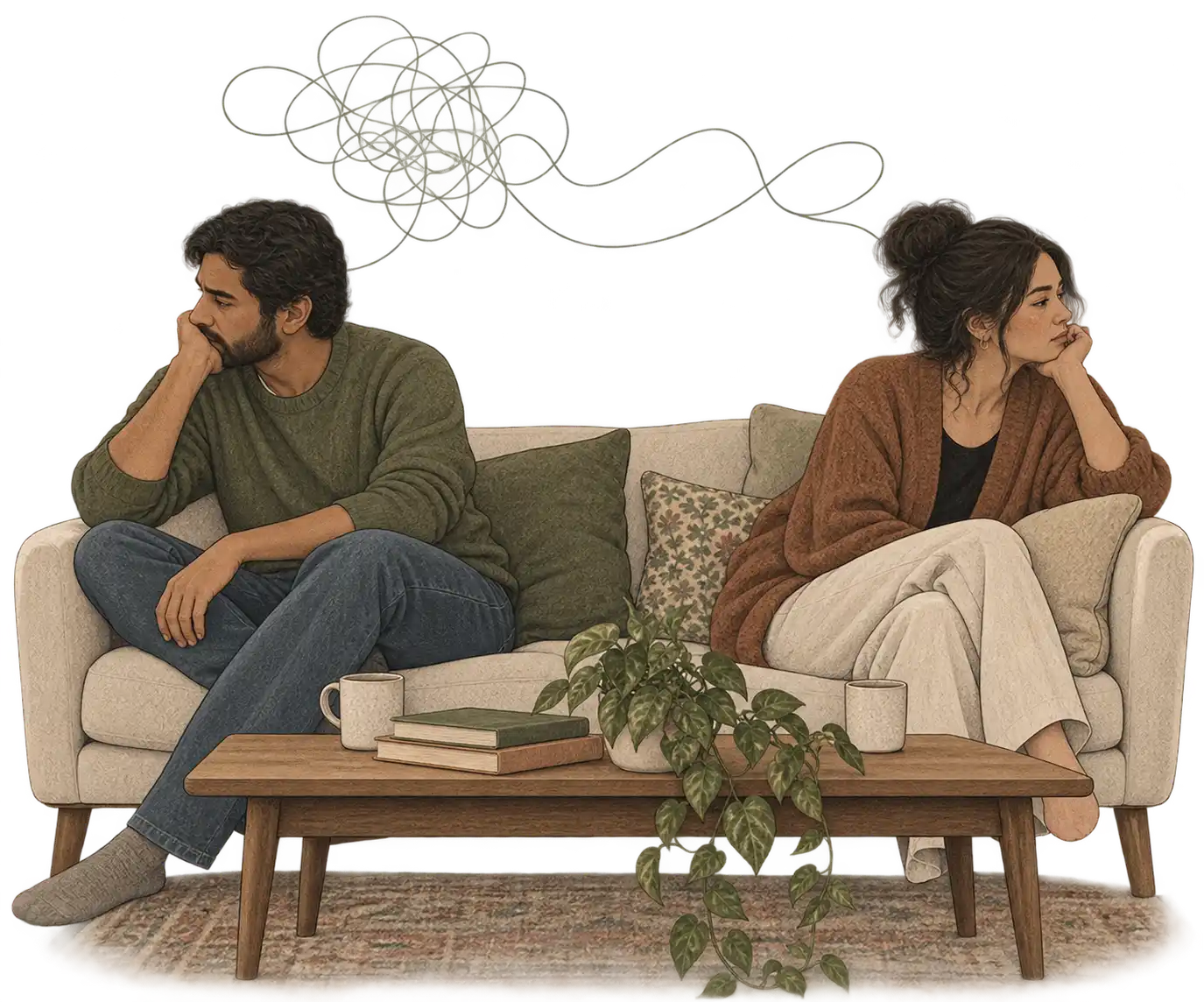
It’s a scene that plays out in homes everywhere. The argument ignites over something that seems trivial—dishes left in the sink, a thoughtless comment, or coming home late without a text. Suddenly, you are caught in a familiar storm of anger, blame, and hurt. You have had this same fight many times and cannot figure out how to stop it.
The fight is almost never about the dishes.
Recurring arguments can point toward a deeper fear. What you are experiencing may be a reactive dance that begins when one or both partners sense a threat of disconnection—a cry for connection in disguise.
The “Protest Polka”: a dance of disconnection
In couples therapy, this pursue-withdraw pattern is sometimes called the “Protest Polka.” The term comes from the work of Dr. Sue Johnson, who developed Emotionally Focused Therapy (EFT), and describes a reactive cycle couples can enter when their emotional bond feels insecure. International Centre for Excellence in EFT (opens in a new tab).
When a partner feels distance or emotional abandonment, they may protest. But that protest rarely sounds like a vulnerable request for closeness. It may sound like:
- Criticism: “You never help around the house.”
- Anger: “How could you be so careless?”
- Withdrawal: “Fine. I’m done talking about this.”
These reactions can be attempts to get a response and reassurance that the other person is still engaged and that the relationship matters.
What is your partner really asking?
The tragedy of the cycle is that it can push away the very person you are trying to reach. Harsh words may mask more vulnerable questions:
- Do I still matter to you?
- Are you there for me?
- Can I count on you to have my back?
- Are we okay?
Seeing the questions beneath the conflict can reframe it. The surface complaint may be less of an attack than a painful and indirect bid for reassurance.
How to interrupt the cycle: three steps
Changing the pattern means noticing it and choosing a different response. These steps can help create that pause:
- Pause and recognize the pattern. When the familiar tension rises, take a breath and name what is happening: “This is our cycle starting.” Awareness creates space between the trigger and your reaction.
- Get curious rather than defensive. Try to look beneath the literal complaint. You might ask, “This seems to have really upset you. Can you help me understand what feels most painful right now?”
- Speak the underlying need. Instead of “You’re always on your phone,” try, “When you look at your phone while I’m talking, I feel unimportant and worry that you are not interested in me.”
This shift can feel vulnerable and risky. Couples therapy can provide a guided space to slow down the cycle, understand each partner’s experience, and practice more direct ways of reaching for one another.
Frequently asked questions about recurring conflict
Why does my partner seem unhappy with me so often?
Persistent criticism may sometimes be part of a protest pattern driven by fear of disconnection. That does not excuse hurtful behavior, but understanding the pattern can help both partners respond to the deeper concern rather than only the surface complaint.
How can we resolve arguments more effectively?
Try to address both the practical issue and the emotional meaning underneath it. The aim is not to eliminate every disagreement, but to create enough safety to discuss what each person needs without escalating the cycle.
Is it normal to have the same fight repeatedly?
Recurring conflict is common. It often indicates that the practical problem or the emotional concern beneath it has not yet been understood and addressed together.